I Am Putting Two Art Panels Together How Can I Fill the Gap to Make It One Piece
What are those little triangular pieces of woods for?
After hearing a few experienced artists say they merely threw their wedges away and later hearing them wonder about the best manner to tighten upwardly a slightly sagging canvas, I decided possibly the humble canvas wedge needed some clarification.
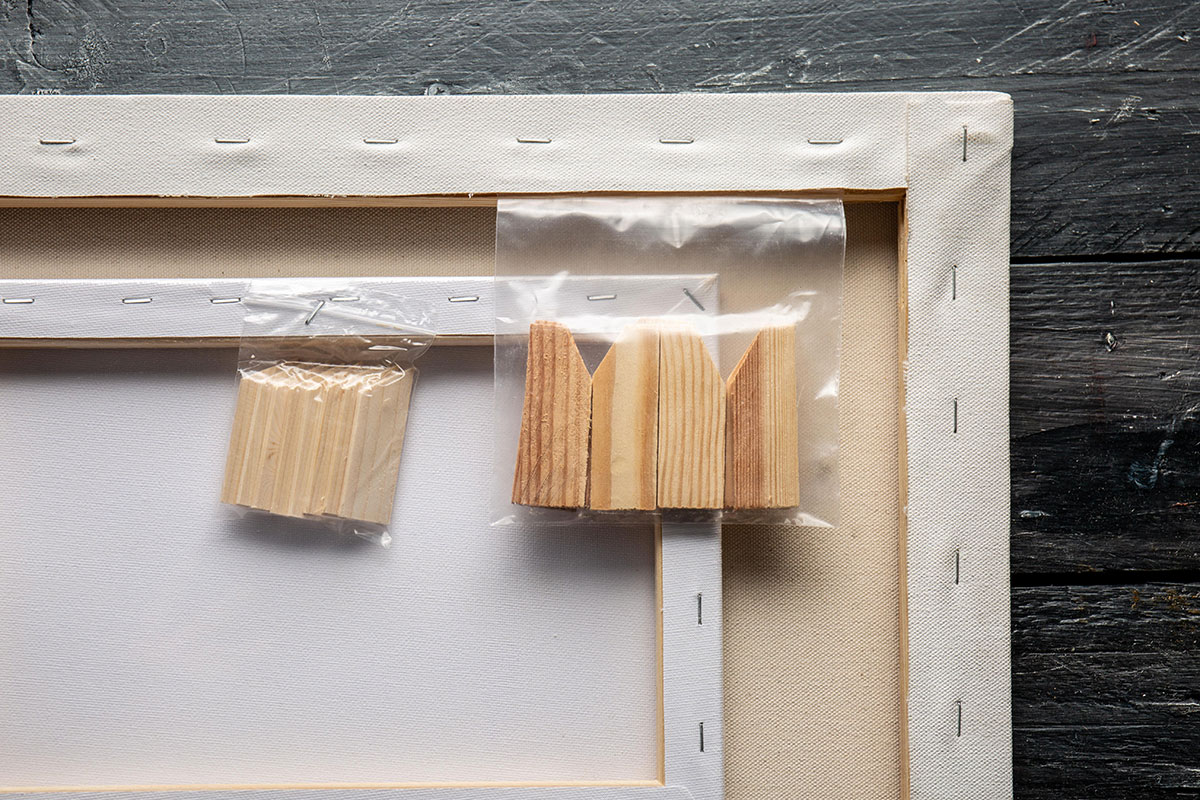
When you purchase a gear up-made canvas it will usually come with a little plastic bag of eight canvas wedges, often stapled inside the wrapping. Occasionally the wedges are already inserted in the canvas frame. When you lot purchase stretcher bars to brand your own canvas, you will receive eight wedges per four confined (to make one sheet). The size of the wedges varies – bigger confined will have bigger wedges. The shape can vary a flake as well, each manufacturer makes the ones that best fit the slots that accept been made in the corner of their stretcher bars.
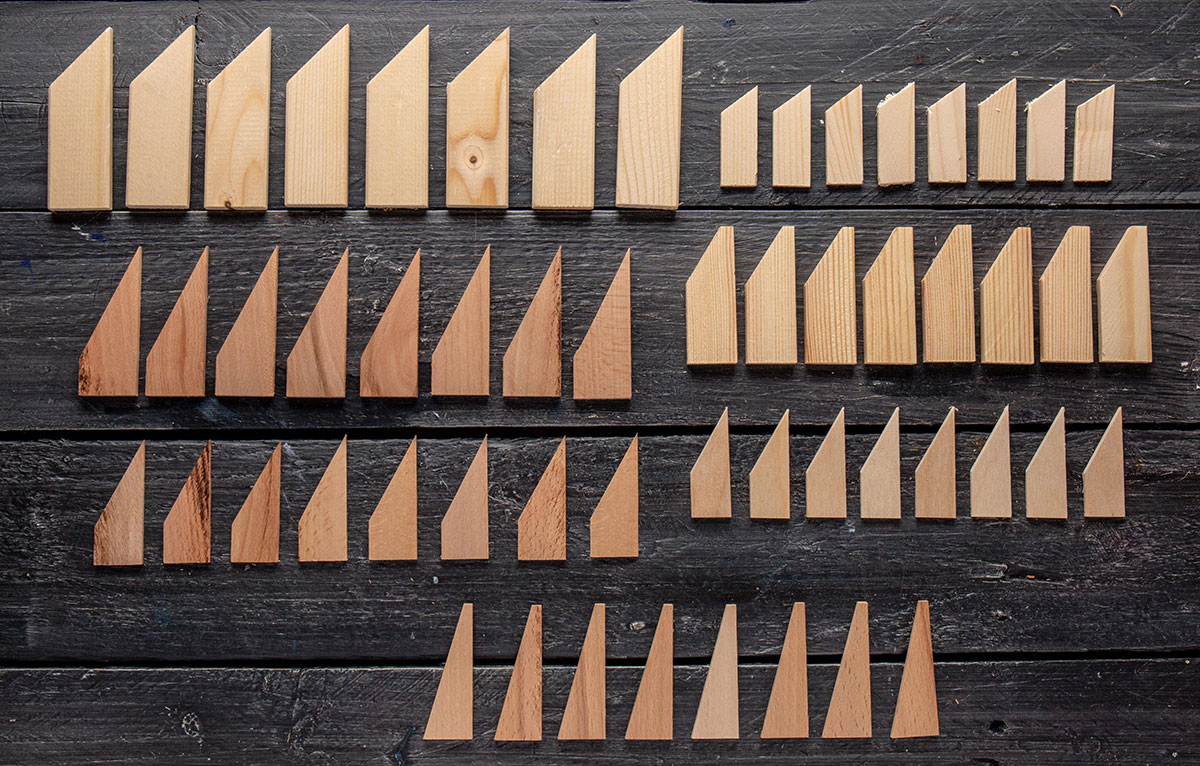
Many artists throw these modest $.25 of wood away or showtime filling a drawer with them. Merely painter'due south corner keys or retainers (ii other names for them) can exist very useful – if you don't already use them you might want to requite them a effort. New canvases often need to be tightened and former paintings on canvass can become loose over time, usually because of humidity changes and temperature fluctuations, and your canvas that was every bit tight every bit a drum tin loosen on its stretcher bars. They tin easily be made tauter with corner tightening wedges, which expand the mitred corner of the bars slightly, enlarging the frame by a millimetre or and so.
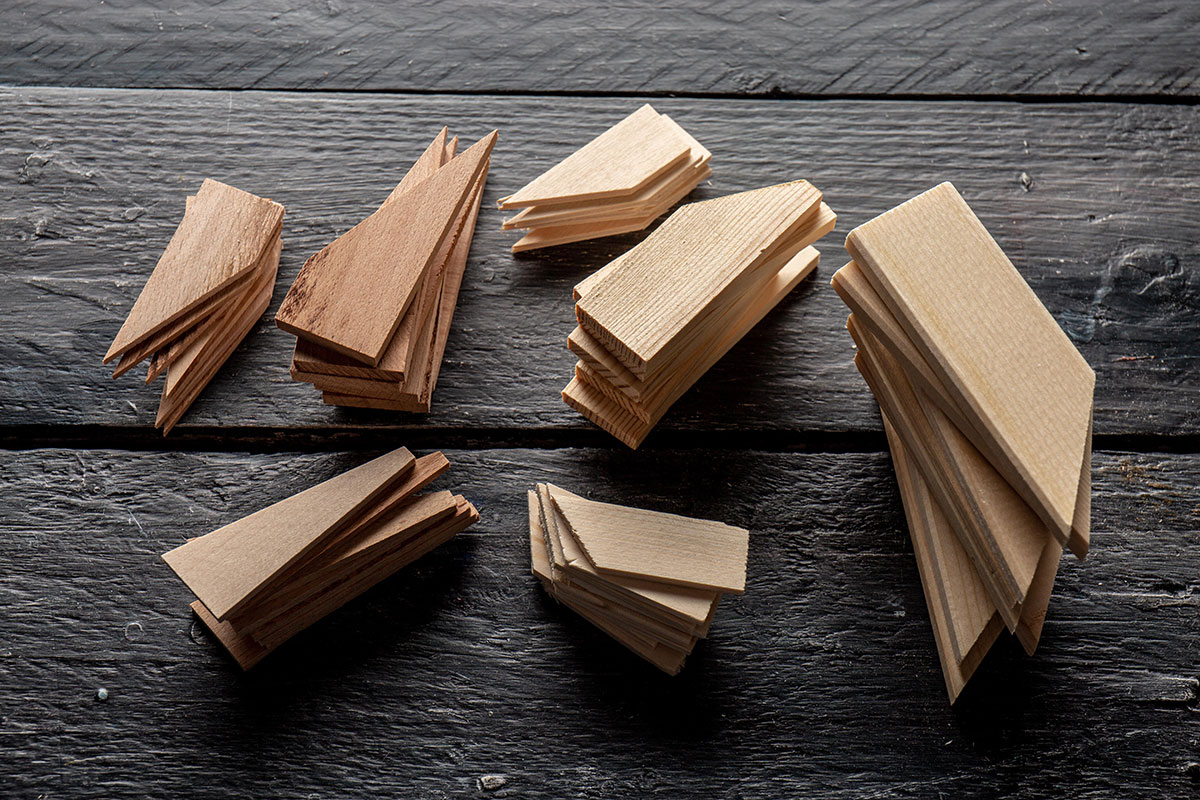
Wedges can be inserted into the canvass bars before painting or after.
They can exist used to:
- finish the stretching of a hand-stretched canvas – to requite information technology that last flake of tightening. If y'all are priming your canvas, look until yous have primed it as priming will cause the canvas to compress.
- tighten upwards a set-fabricated sheet that has loosened up in storage or shipping (the tightness of a canvas will relax naturally over time). If your canvas arrived and is just a flake looser than you'd like, inserting the wedges will usually solve the trouble. Ofttimes a couple of millimetres is all information technology takes to make a loose canvas taut again, or pull a sag out of a corner. If it arrives with the wedges already inserted in the canvas frame they may need a little tap to fully set them in.
- tighten a sail that was fine when you started painting merely the weight of paint and pressing on information technology has acquired it to loosen a bit. And then when you are finished painting and varnishing, assess if information technology needs a bit of tightening now. This is a reason to keep the wedges for future use, because the fabric tightness may change. Take care to practise it gently as over-stretching suddenly can scissure an oil painting.
- re-stretch a finished painting if it sags subsequently many years. When a painting goes slack over time because the temperature and humidity in a building changes throughout the twenty-four hour period and twelvemonth, inserting wedges should allow you lot to tighten the canvass back upward without having to re-stretch it. Have care to do it gently every bit over-stretching of a sudden tin can crack an oil painting.
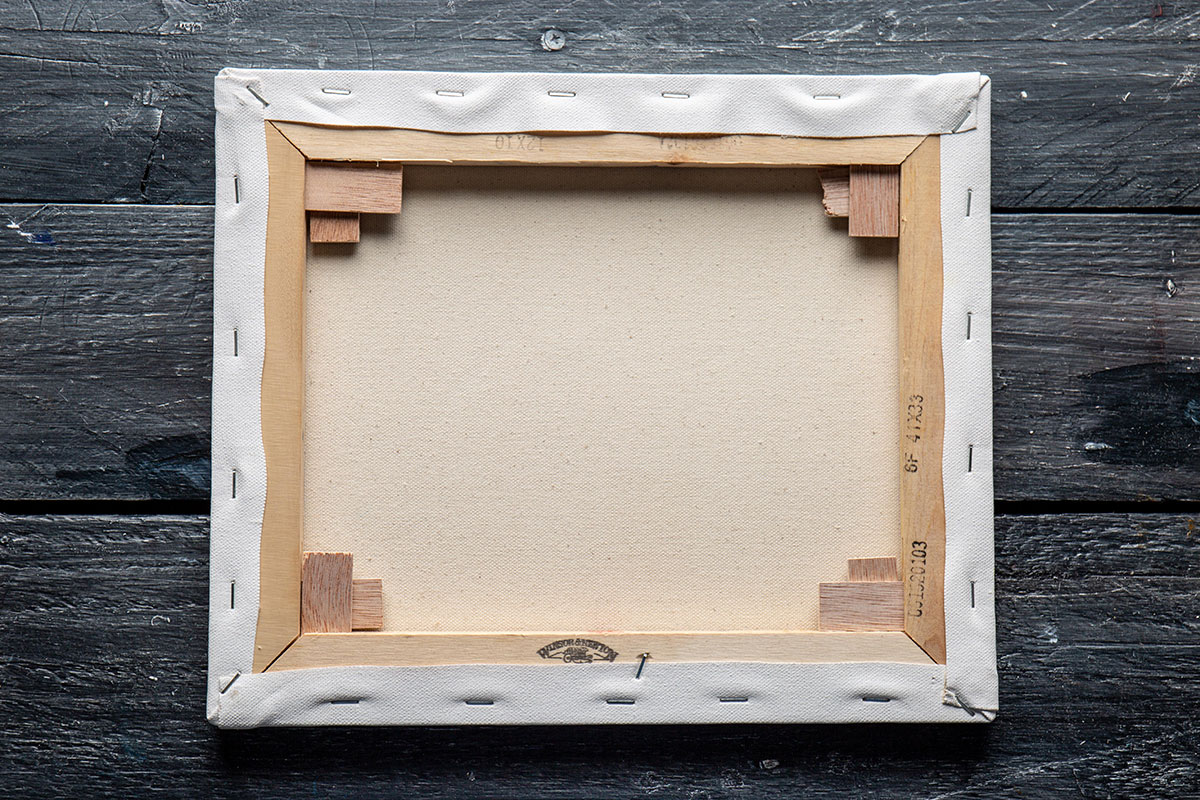
A canvas all tightened up with wedges and fix to paint on. Notice the small gap that is now in each of the mitred corners.
Inserting the canvas wedges
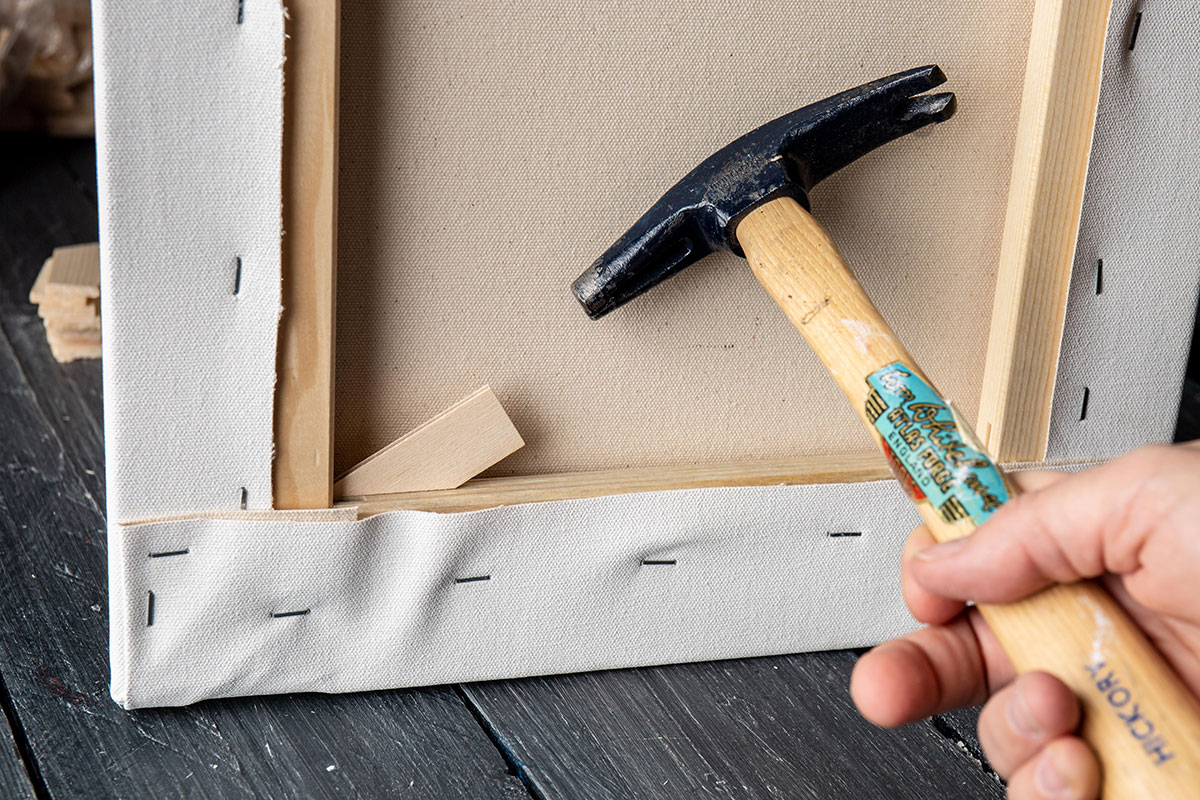
In each within corner of a ready-stretched canvas or one you've stretched yourself, at that place are 2 slots in which to fit the wedges. Each slot reduces in size the further dorsum it goes so that as the wedges are tapped into the frame it pushes the bars apart at the corner thus stretching the canvas a few millimetres. If y'all spread information technology far enough you tin can run across the gap in the mitred corner expand. By the mode, this doesn't make the corner any weaker, there is still a full dovetail join inside the corner.
From the back of the canvas slide a wedge, point showtime (summit of the triangle), into each slot, one at a time. Requite them a tap with a pocket-sized tack or finishing hammer. Be gentle. Bashing information technology could split the forest of the wedge, or yous could bounce off and hit the back of the canvass, or over-stretching of an oil painting could crevice the brittle painted surface. Some artists tap down with the side of the sheet on the table or floor, some tap upwards. I find upwards to be more hard to aim, but try both and run into which works best for you. Do i corner at a time and try to tap with the same force for each corner so the tension is even. At that place will be two in each corner, eight per canvas. Bank check the front of the sail and if you demand to, go around and tap them all once again. I notice that sometimes 1 corner is sagging more the others and it might assist to give that one corner a few more than taps.
The wedges are asymmetrical and they work well in either orientation – if you insert them with the long side or the brusk side against the side of the stretcher bar. Some stretcher bars seem to accept the wedges a flake better in one way than the other – it must be how the slots are angled within – Winsor & Newton make canvases for instance work all-time with the wedges parallel to the bars. I used to insert my wedges parallel because it looks tidier, but at present I prefer information technology so that the wedges are angled out toward the centre of the canvas, they seem to piece of work a bit better. But I use hand stretched canvases and Jackson'southward Professional Canvases and it works well with them. But the orientation is up to you, try both and see which works better with your canvas.
Information technology is practiced practice to endeavor to get your bars to spread apart a bit earlier you lot start tapping in your wedges, rather so simply using the wedges themselves to push the bars apart. Best practice is that you should do all the movement of the bars past pulling and tapping on the bars to aggrandize them and only inserting the wedges after you have expanded the frame. They are called keys or retainers considering they fit in the space you have created to retain the expansion of the bars.
Claire, our old bespoke sheet maker, explains: "If you need to tighten a canvas during painting, accept a skid or block of forest, hold to the within of the stretcher bar and tap this out with a light hammer (the wood stops you getting hammer marks on the stretcher bars) exercise this on all four insides, then push the wedges home, they are there to act every bit keys to stop the stretcher from contracting they are not to be hit with a hammer. Practice not bang the wedges themselves in."
This is what is meant when someone says you need to 'bang your stretchers autonomously', they hateful to tap the stretcher confined in their centres, 1 at a fourth dimension, abroad from the eye of the canvas. After you take expanded the sail a bit then button your wedges in to hold them apart, similar a doorstop wedge holds open a door, or a keystone hold a masonry arch in place. I detect this allows the wedges to exist pushed in further earlier you first tapping on them and gives a tighter canvass. But I usually practice need to practise some more than pushing with the wedge to finish the chore.
In case you were wondering – the wedges are meant to be left in permanently. They keep the corner of the stretcher frame pushed autonomously slightly. If you lot remove them the canvass will sag once again equally the bars move together.
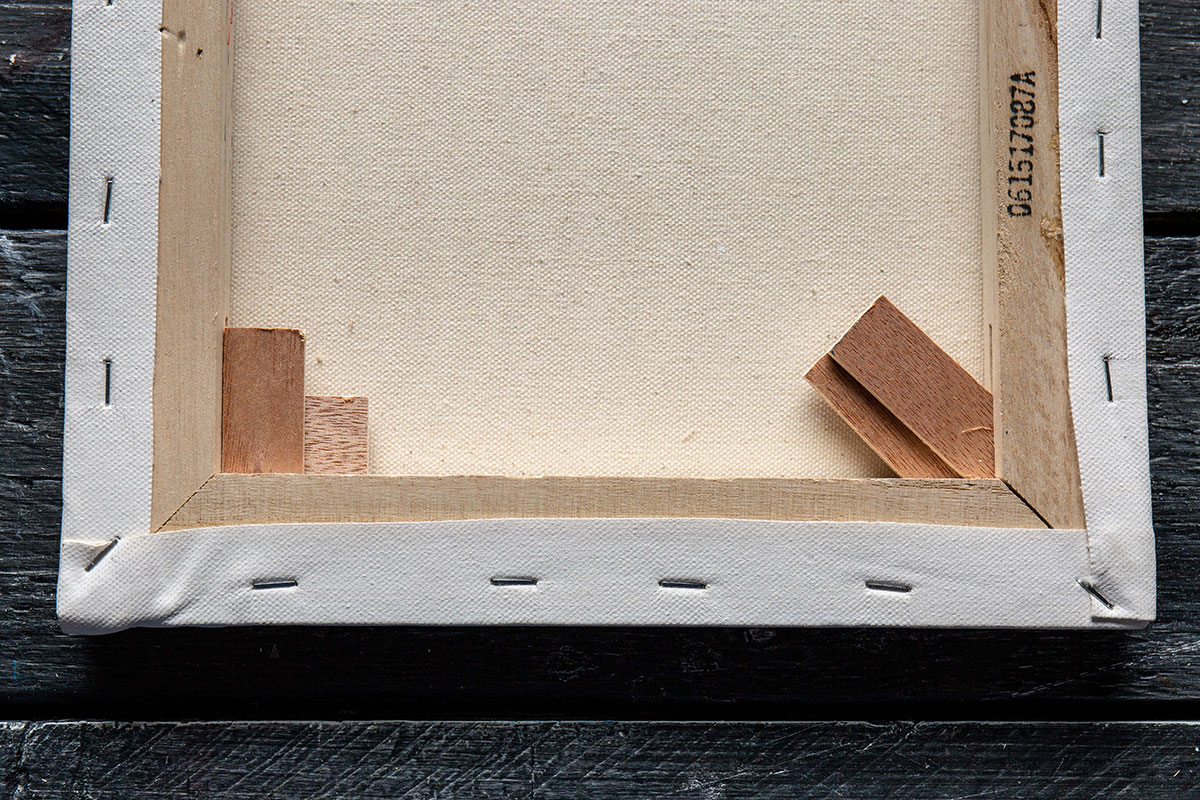
Shown on the left: inserted long side to the bar. On the right: short side to the bar. Either fashion is fine.
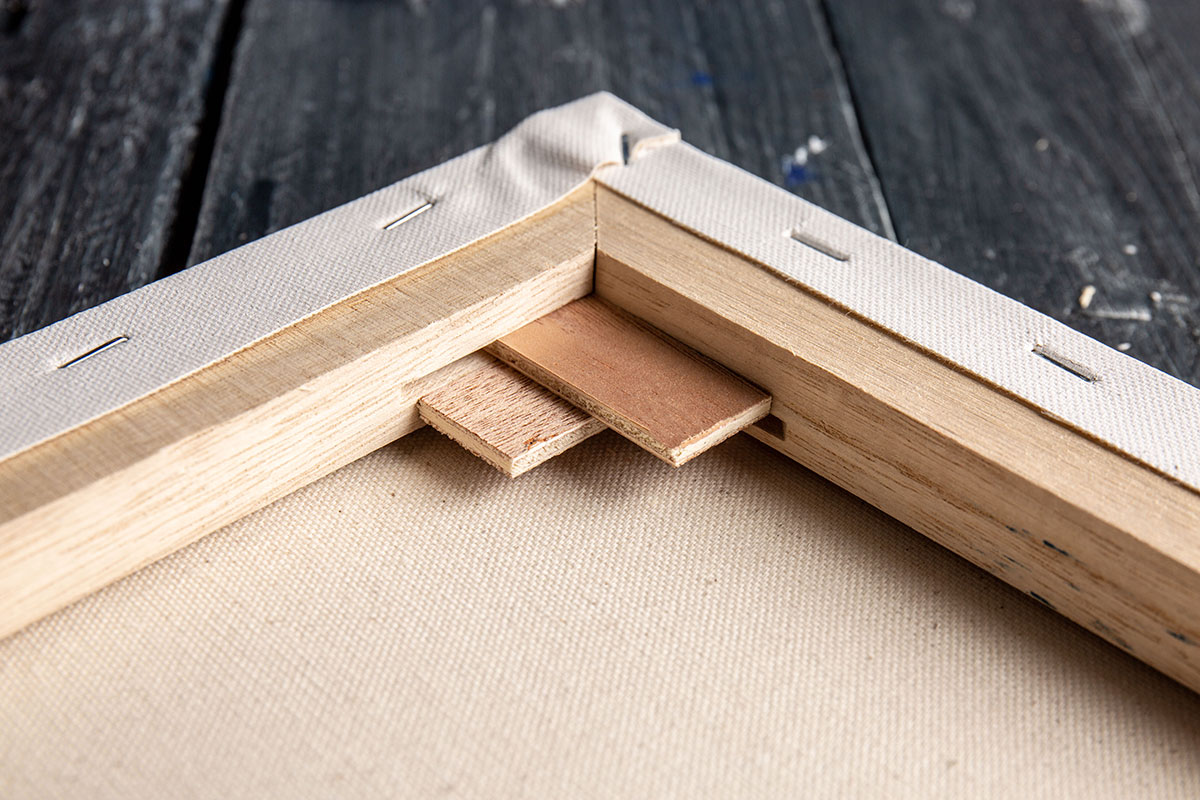
Inserted with the long side of the point along the edge stretcher bar then that the wedge sits parallel to the bar.
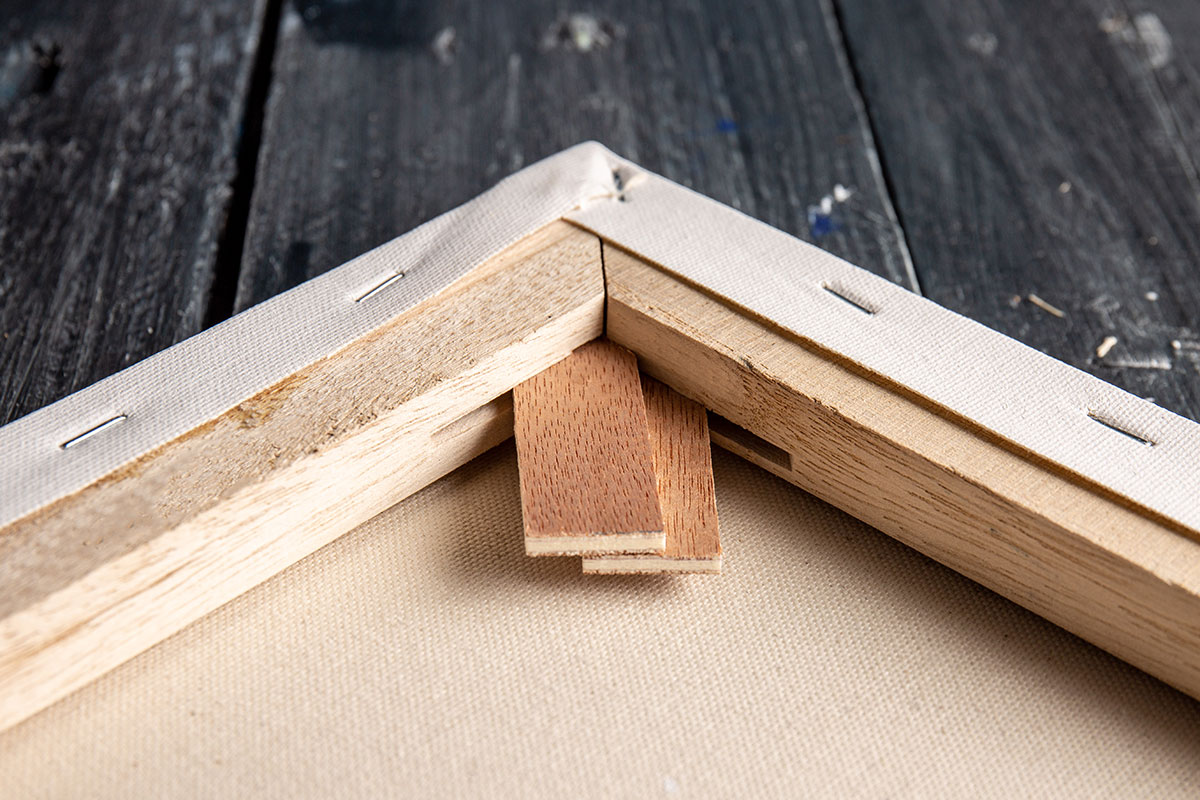
Inserted with the short side of the betoken along the edge stretcher bar so that the wedge sits diagonally.
Centre bar wedges
Middle confined also have a little gap and when you purchase a eye bar to stretch your ain canvas you lot should receive some slim wedges to tighten up the centre bar.
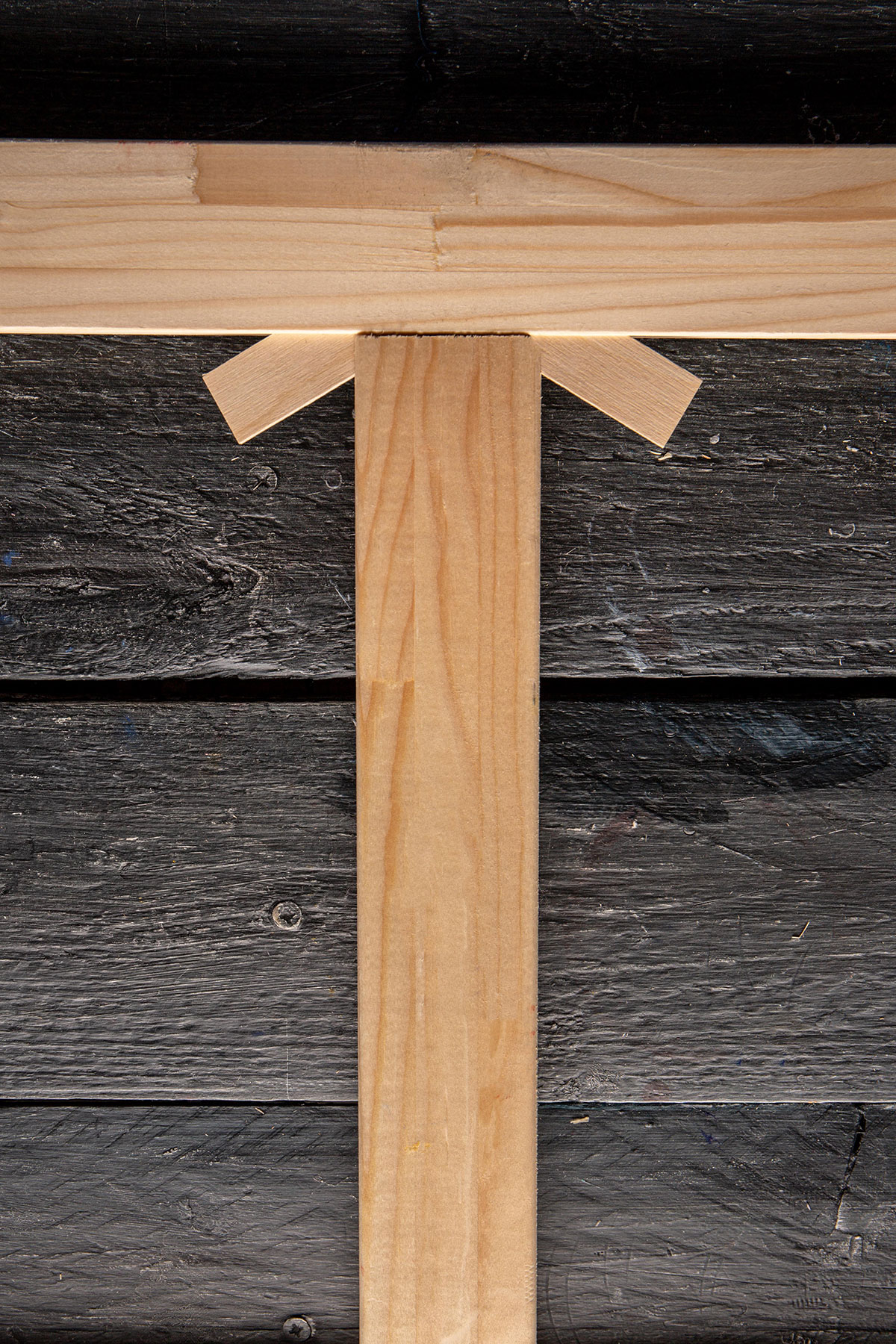
You can tap the pocket-sized wedges into a eye bar if you wish to tighten the forest.
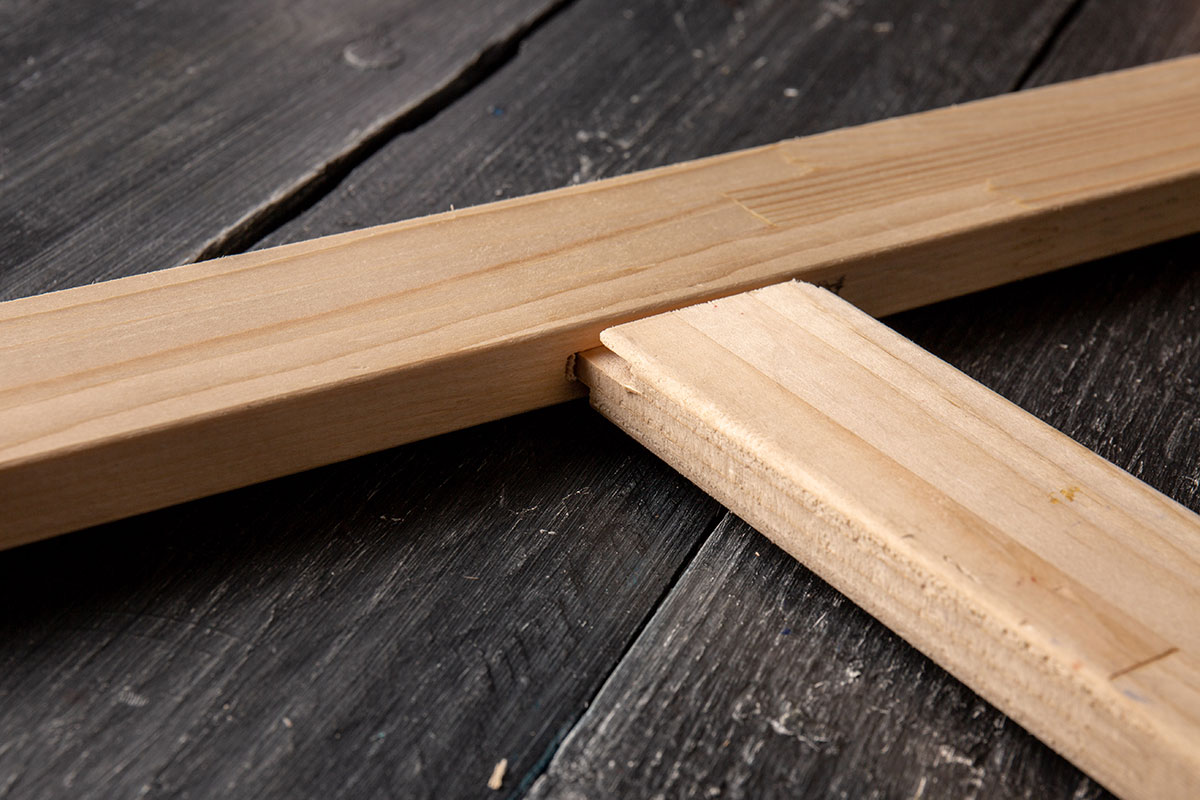
When edifice a canvass there is a front and a dorsum to the centre bar. The slot gap for the wedge should be facing the back.
Read our other manufactures about canvass and canvas stretching
- Choosing the Right Canvas for Your Painting
- Everything You Demand to Know Nigh Stretcher Bars
- How To Gather Stretcher Bars for Canvas
- The Right Canvas: choosing stretcher bars, canvas and priming
Stretched Canvases at Jackson'due south Art
- Stretched Canvas
- Bespoke Stretched Sheet
- DIY Sail Stretching – Stretcher Confined
- DIY Canvass Stretching – Canvas by the metre
Postage stamp on orders shipped standard to mainland UK addresses is free for orders of £39.


Source: https://www.jacksonsart.com/blog/2018/09/12/how-to-use-canvas-wedges-that-come-with-a-canvas-or-stretcher-bars/
0 Response to "I Am Putting Two Art Panels Together How Can I Fill the Gap to Make It One Piece"
Post a Comment